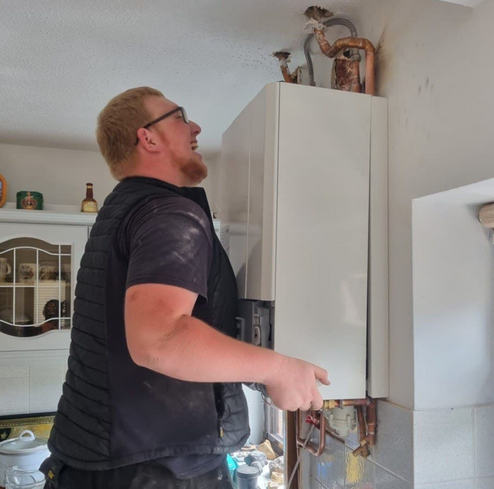
A boiler may occasionally need repressurising, but frequent pressure loss usually indicates that water is escaping from the heating system or that a component is not working correctly. Repeatedly topping up the boiler may restore operation temporarily, but it does not address the underlying cause.
For homeowners in Buxton, Derbyshire, recognising the likely warning signs can help determine when a straightforward check is appropriate and when professional attention is needed.
Common Reasons a Boiler Keeps Losing Pressure
Boiler pressure relates to the water circulating through a sealed central heating system. The correct reading varies between appliances, so the manufacturer’s instructions should always be followed. A substantial or recurring drop should not be treated as normal.
A Leak Somewhere in the Heating System
Even a small leak can gradually reduce system pressure. Water may escape from radiator valves, pipe joints, exposed pipework or connections beneath the boiler.
Check accessible areas for:
- droplets around radiator valves
- damp patches beneath pipe joints
- staining on walls or ceilings
- moisture beneath the boiler
- corrosion around heating connections
- unexplained dampness near pipework
Some leaks are too small to form an obvious puddle, particularly when water evaporates from a warm surface. Concealed pipework can also make the source difficult to locate.
A Radiator Valve or Connection Is Seeping
Radiator valves and connections are common points for minor water loss. Run a dry piece of tissue around accessible joints to identify moisture that may not be immediately visible.
Do not tighten or dismantle fittings unless you have the necessary knowledge. An incorrect adjustment can worsen the leak or damage the connection.
The Pressure Relief Pipe Is Dripping
A boiler has a pressure relief valve designed to release water if the system pressure becomes excessive. Its discharge pipe usually terminates outside the property.
If this external pipe is dripping or remains wet, the valve may have operated or developed a fault. Manufacturer guidance recommends professional assistance where a heating system continually loses pressure or water is being discharged from this pipe. worcester-bosch.co.uk
The Expansion Vessel Is Not Working Correctly
The expansion vessel accommodates changes in water volume as the heating system warms up. If it loses its internal charge or develops a fault, the boiler pressure may rise considerably when hot and then fall after the system cools.
A noticeable cycle of high pressure during heating followed by low pressure afterwards can point towards an expansion vessel issue. This component should be assessed by a qualified heating engineer rather than adjusted by the homeowner.
Radiators Have Recently Been Bled
Bleeding a radiator releases trapped air, but it can also reduce the pressure within a sealed heating system. A small drop immediately afterwards may therefore be expected.
The system may need to be repressurised in accordance with the boiler manufacturer’s instructions. If pressure continues falling after this has been done, another cause should be investigated.
The Boiler Has Recently Been Repressurised
If the pressure was restored but quickly dropped again, the system is unlikely to need repeated topping up without further investigation. Frequent repressurising introduces fresh water into the heating circuit without resolving where the original water went.
Official consumer guidance advises checking the pressure gauge and following the appliance instructions where topping up is required. gassaferegister.co.uk If the problem keeps returning, professional diagnosis is appropriate.
What Can You Check Safely?
Without removing the boiler casing, you can check:
- the current reading on the pressure gauge
- the manufacturer’s instructions for the normal operating range
- visible radiator valves and pipe joints
- accessible pipework for dampness
- the floor beneath the boiler
- the external pressure relief pipe for dripping
- whether the pressure changes significantly when the heating warms up
Record the cold pressure and observe how it changes while the heating operates. This information can help an engineer identify the likely fault.
Should You Repressurise the Boiler Yourself?
Some boilers are designed to be repressurised by the user through an external filling loop, internal filling key or integrated filling mechanism. The method differs between manufacturers and models.
Only follow the instructions provided for your specific appliance. Do not guess which valves to operate, overfill the system or remove the boiler casing. Manufacturer guidance commonly places the cold operating pressure around 1 to 1.5 bar, but the instructions for the individual boiler should take priority. Worcester Bosch
When Should You Contact a Heating Engineer?
Arrange a professional assessment if:
- pressure falls repeatedly after topping up
- water is visible beneath the boiler
- an external discharge pipe is dripping
- the pressure rises sharply when the heating is on
- radiator valves or pipework are leaking
- the boiler regularly stops working
- no visible leak can be found
- you are unsure how to repressurise the appliance
Do not remove the boiler casing or attempt to repair internal components. Boiler repairs should be completed by a suitably qualified professional.
Why Accurate Diagnosis Matters
Low pressure is a symptom rather than a complete diagnosis. Topping up the system may restart the boiler, but persistent pressure loss could originate from pipework, radiators, the pressure relief valve, the expansion vessel or another component.
A professional assessment considers how quickly pressure falls, whether it changes when the system heats up and where water may be escaping. This allows the underlying fault to be addressed instead of repeatedly restoring the gauge reading.
Conclusion
A boiler that keeps losing pressure may have a small system leak, a dripping pressure relief pipe, a faulty expansion vessel or pressure loss following radiator bleeding. Safe visual checks can provide useful clues, but recurring pressure loss requires proper investigation.
If your boiler is repeatedly losing pressure in Buxton, Derbyshire, contact Buxton Plumbing & Heating to arrange a professional assessment and identify the appropriate solution.
Call us on: 01298 605 397
Click here to find out more about Buxton Plumbing & Heating
Click here to complete our contact form and see how we can help with your plumbing needs.